The core of the explosion protection document is the area classification
Area classification is the basis of safety. Area classification determines how often and in what situations an explosive atmosphere can form in the workplace. In practice, it identifies those places and situations where even a small spark or other source of ignition can cause an explosion.
All protective measures, such as equipment selection, working methods, and maintenance, are decided on the basis of the area classification. If the area classification is wrong, the protection will also be wrong. Therefore, it is important that the area classification is done accurately and professionally.
-
Explosion protection is a set of various measures that aim to prevent an explosion or limit its effects. The purpose of explosion protection is to protect employees and property.
Explosion protection can include
- Explosion protection document (is an appendix to the rescue plan)
- Area classifications (what activity causes the hazard, where it is located and what is the zone)
- Area classification drawings (these visualize the hazard)
- Instructions for safe working in a potentially explosive area, regardless of the task
- Equipment requirements in potentially explosive areas (what type of electrical equipment and other equipment are suitable)
- List of hazardous substances (these specify the equipment requirements)
- Work instructions on how to work in EX-areas
- Work permit procedure, which takes into account maintenance work
- Checking the appropriateness of equipment (risk assessment for old equipment)
- Checking grounding (is it grounded, are there diagrams, are there measurement logs)
- Checking the appropriateness of ventilation (correct implementation, measurement logs)
- List of electrical equipment and ATEX equipment list (for preventive maintenance)
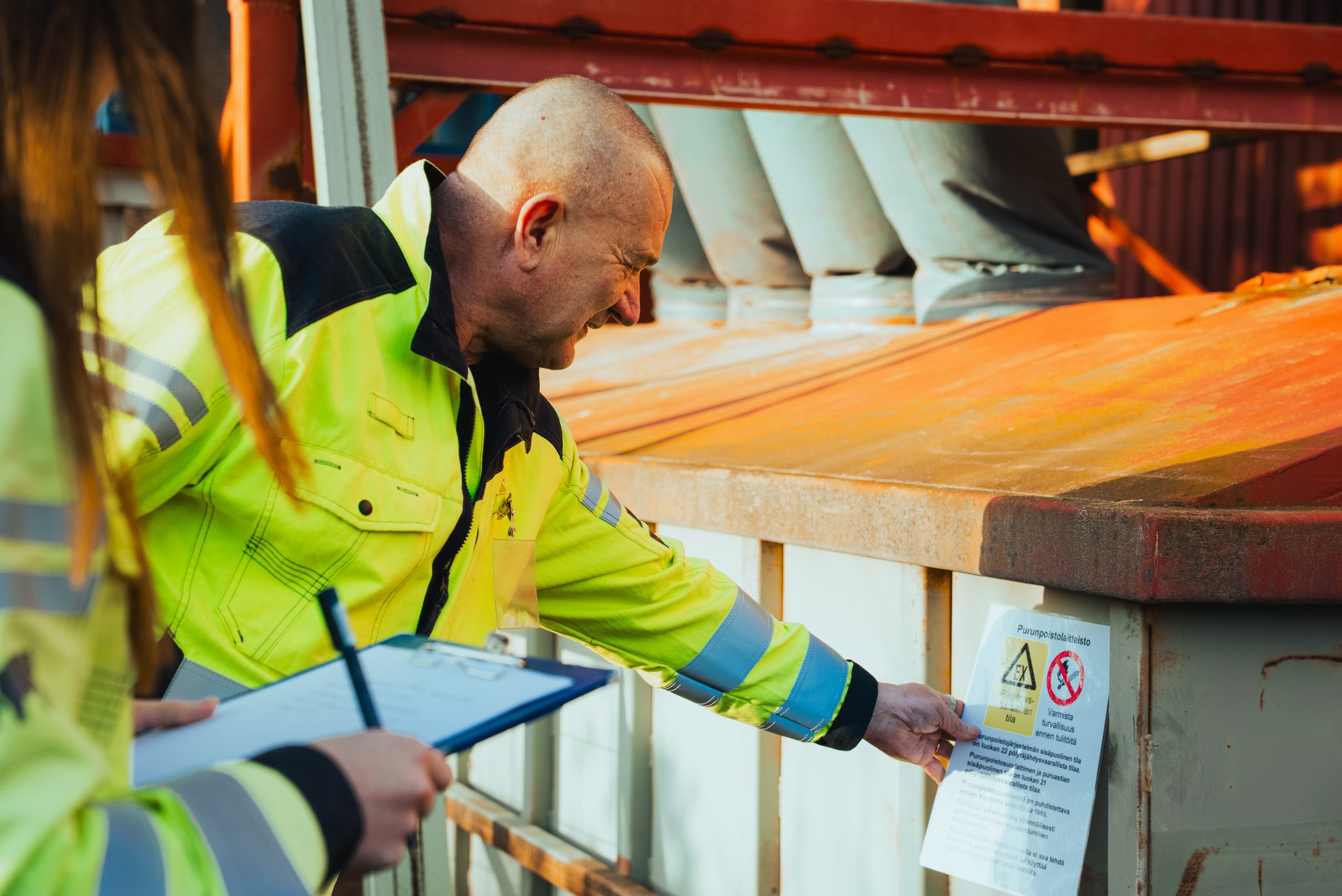
- Instructive marking plates for EX-areas
- Training for personnel (VNA 576/2003 Annex 2 Section 1.1)
- Document updates in connection with maintenance changes or extensions (documents must be up to date)
-
The explosion protection document should always be updated when
- processes or operations change
- substances or quantities of substances change
- premises are modified
legislation or standards are updated (e.g. SFS Handbook 59 was updated in 2022-2024)
(VNa 576/2003)

Why choose Exvira’s explosion protection document?

A document that is actually used
We create the document in a format that is easy to read and use. Clear area classification drawings, concrete instructions for working, instructions for equipment selection, and informative signs for marking hazardous areas help everyone understand when and where the explosion hazard can occur and how it should be taken into account in work and maintenance.
40 years of experience
We have prepared explosion protection documents for over 1,700 sites in Finland and around the world, so we have a wide customer base from different industries. We know where things can go wrong and how to prevent it.

Accurate area classification = saving money
When area classification is done accurately and professionally, the workplace is safe, and there is no need to buy ATEX equipment for areas where it is not needed. We have brought cost savings to many customers by reducing overly cautious and oversized EX-areas.
Independent view
We provide you with an impartial area classification, as we do not supply equipment or technology. We use our experience to create a safe area classification that works for you in practice.
10-year guarantee: we answer and help
We are committed to helping our customers for 10 years – we will answer all your ATEX-related questions by email free of charge.
Our services
Basic explosion protection document
-
Project scope: 1–14 h
Delivery time: 1-3 months as agreed
Express delivery as an additional service by agreement
-
Suitable for operators with
- small-scale potentially explosive activities
- only a few flammable substances
- relatively few potentially explosive areas
- only a simple change to the current explosion protection document is required
-
- As needed
-
- We will get to know your operations based on initial information or a visit
- We will prepare an explosion protection document that complies with the requirements, which includes
- Risk assessment and discussion with the customer during a possible visit
- Area classification texts
- Area classification drawing
- Instructions on suitable equipment for the premises
- Instructive sign plates for ex-areas
- Instructions for safe working
- Inspection report and recommended measures
We will send the document to your responsible person for comment, after which we will make the necessary corrections and additions.
-
- floor plan in .dwg or .pdf format, if available
- photographs of the facilities according to our instructions
- information on hazardous substances, possibly material safety data sheets
Price
Hourly rate 110 € / h + travel costs for the visit
E.g.
- Explosion protection document for a small paint room- 5 h – 550 € (when no visit is required)
- Explosion protection document for paint shop – 10 h – 1100 €
Every project is unique. Contact us, and we will provide you with an accurate quote.
Extensive explosion protection document
-
Project scope: 15–100+ h
Delivery time: 3-12 months as agreed
Express delivery as an additional service by agreement
-
- Suitable for operators if the operation has any of the following
- the operation causing the explosion hazard is extensive, e.g.
- several buildings
- several substances
- several devices in a potentially explosive area
- the operation causing the explosion hazard is extensive, e.g.
- complex processes
- highly flammable substances
- there are no up-to-date process descriptions or equipment layout drawings
- Suitable for operators if the operation has any of the following
-
- Likely necessary
-
- We will get to know your operations based on initial information or a visit
- We will prepare an explosion protection document that complies with the requirements, which includes
- Risk assessment and discussion with the customer during a visit
- Area classification texts
- Area classification drawing
- Instructions on suitable equipment for the premises
- Instructive sign plates for ex-areas
- Instructions for safe working
- Inspection report and recommended measures
We will send the document to your responsible person for comment, after which we will make the necessary corrections and additions.
-
- floor plan in .dwg or .pdf format so we can utilize it in making the area classification drawing
- equipment layout drawings in either .dwg or .pdf format, if available
- information on hazardous substances, possibly material safety data sheets
- process diagram if necessary
- descriptions of operations if necessary
Price
Hourly rate 110 € / h + travel costs for the visit
E.g.
- Chemical plant explosion protection document, 40 h – €5500 (incl. travel costs)
Every project is unique. Contact us, and we will provide you with an accurate quote.
Additional services
Creating a layout drawing or making additions to it
-
Depending on the size of the workplace:
Small scale floor plan
OR
Large scale floor plan
Price
Hourly rate 110 € / h
E.g.
- Small car repair shop floor plan 2 h – 220 €
- Factory floor plans 20 h – 2200 €
- Large factory floor plans 60 h – 6600 €
Every project is unique. Contact us, and we will provide you with an accurate quote.
Express delivery
-
If you are in a hurry with your explosion protection document, you can inquire about the possibility of express delivery.
Risk assessment of current operations with corrective actions and recommendations
-
In addition to preparing an explosion protection document, we will also assess the risks of the current operation and provide corrective measures.
In practice, we will train you during the visit on the ATEX issues of your premises and you will receive suggestions for corrective measures. If necessary, you will also receive this information in writing.
Hinta
Hourly rate 110 € / h
E.g.
- Small car repair shop 2 h – 220 €
- Technochemistry facility 5 h – 550 €
Every project is unique. Contact us, and we will provide you with an accurate quote.
Customer experiences

”We now have a much deeper understanding of explosion risks"
"The benefits of working together have been significant. We now have a much deeper understanding of explosion risks and the classification of explosion areas. The ready-made signs provided for each area are particularly valuable—they make it easy for everyone to identify risks and take the right actions quickly. This clarity has brought real value to our operations and improved our overall safety approach."

"We have been satisfied with all the work that Exvira has provided"
"Our factory has been a customer of Exvira for years, as Exvira is a reliable partner. Over the years, we have commissioned updates to ATEX documents, consulted on the effects of various changes on the area classifications in our process, and received training tailored to our factory for both production personnel and our experts. We have been satisfied with all the work that Exvira has provided. "
Annika Karjalainen
Process Safety Manager, IFF / Genencor International Oy
Frequently asked questions
-
Yes, the area classification drawing is an important part of the explosion protection document. We make a clear area classification drawing, which makes it easy to identify the different zones in the layout. We also add descriptive texts that explain why there are different zones and how far they extend.
-
The employer is obliged to assess the explosion risks and, if necessary, draw up an explosion protection document. (ATEX Directive 1999/92/EC) (In Finland, Government Decree 576/2003.) Simply put, if substances are used that cause an explosion hazard (e.g. flammable gases, liquids or dusts) the area classification must be made. If the operation runs in a way that does not cause a potentially explosive atmosphere, the area classification can state that, and ambiguities and misunderstandings.
-
ATEX should be considered already in the design phase. A well-designed process can save time and money when ATEX is considered from the beginning, and it is clear what areas require ATEX equipment and where they are not needed. This avoids expensive additional or corrective purchases and installations when ATEX is already considered from the beginning. If ATEX is only considered at the end, risks are likely to occur.
-
The legislation obligating employers is the ATEX Atmosphere Directive 1999/92/EC and Government Decree 576/2003 (Finland).
Exvira’s explosion protection document is a good solution to ensure compliance if your own resources are not sufficient to familiarize yourself with the ATEX requirements. Or if you are in doubt whether you have been able to assess the explosion risks and explosion protection measures correctly. In addition to ATEX documents, we can also assess the need for personnel training. Contact us and we will figure out how we can help you.
-
Fire inspectors, occupational safety authorities and TUKES monitor the safety of potentially explosive areas across Finland.
-
There are requirements for documentation for equipment in potentially explosive atmospheres:
- The equipment must have ATEX certificates or declarations of conformity (in the certificate you can find if there are any restrictions for safe use)
- Descriptions of the protection of intrinsically safe circuits
- Installation, operating and maintenance instructions for ATEX equipment (in Finnish and Swedish)
- Commissioning inspection, verification inspection and periodic inspection logs for electrical equipment